Expert Researcher

Asmita Parshotam

About

Asmita Parshotam is an independent trade and development expert and an admitted attorney of the High Court of South Africa. Asmita has previously worked at the World Trade Organisation in Geneva, the European Centre for Development Policy Management, a research institute based in the Netherlands, and the South African Institute of International Affairs in Johannesburg. She currently works as an SMME Policy Expert at the EU-funded Ecosystem Development for Small Enterprise (EDSE) Programme.

Publications: 15
Features: 8
AREAS OF EXPERTISE

@AsmitaParshotam

EDUCATION
All work from Asmita Parshotam
31 March 2020

Women Traders in East Africa: The Case Study of the Busia One Stop Border Post

Across the continent, African countries are implementing various projects to improve intraregional trade, with a specific focus on improved trade facilitation and the constraints that impede cross-border trade. Efforts have focused on ensuring improved …

Continue reading ›
1 November 2019

Policy considerations for gender equality and the AfCFTA

Recent months have borne witness to an explosion of women-led protests across the world. These include attempts from governments to restrict and regulate women’s reproductive and sexual rights, the #MeToo movement, and the ‘glass ceiling’ facing women’ …

Continue reading ›
28 June 2019

Perspectives on PPP Infrastructure Development in SADC Countries

Implementing public–private partnerships (PPPs) can provide national governments with much more attractive conditions for private investment. In return, governments can gain many advantages from private investors, such as greater operational efficiency …

Continue reading ›
28 June 2019

Implementing the TFA: Trade Facilitation Activities in Zambia

This paper examines the implementation of the Trade Facilitation Agreement (TFA) in Africa. It gives a macro view of the overall benefits that improved trade facilitation holds for Africa, and highlights some of the benefits that implementing the TFA h …

Continue reading ›
5 November 2018

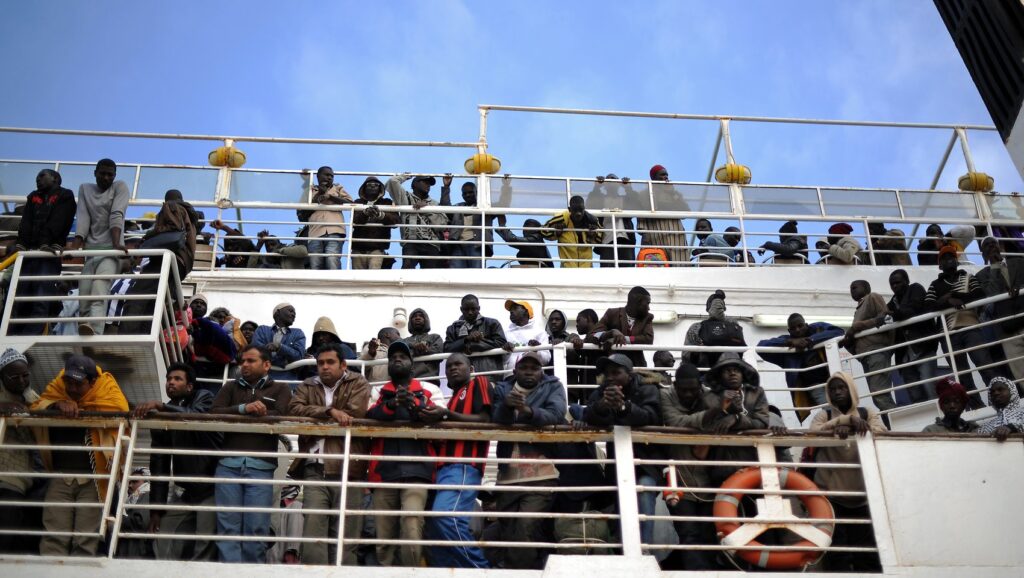
Sliding towards disaster: Migration in European-African relations

Media-fuelled perceptions of European countries being “swarmed” by Africans arouse deep-rooted insecurity about national identity, mistrust of “the other”, racism, and xenophobic attacks. Indeed, the world is witnessing increased anti-migration sentime …

Continue reading ›
29 October 2018

Opportunities and Challenges in Engendering the African Energy Value Chain

This policy briefing draws on the findings of a discussion paper examining South Africa and Rwanda’s efforts to include women in the renewable energy (RE) sector. A comprehensive gender mainstreaming toolkit was developed based on this research, which …

Continue reading ›
14 September 2018

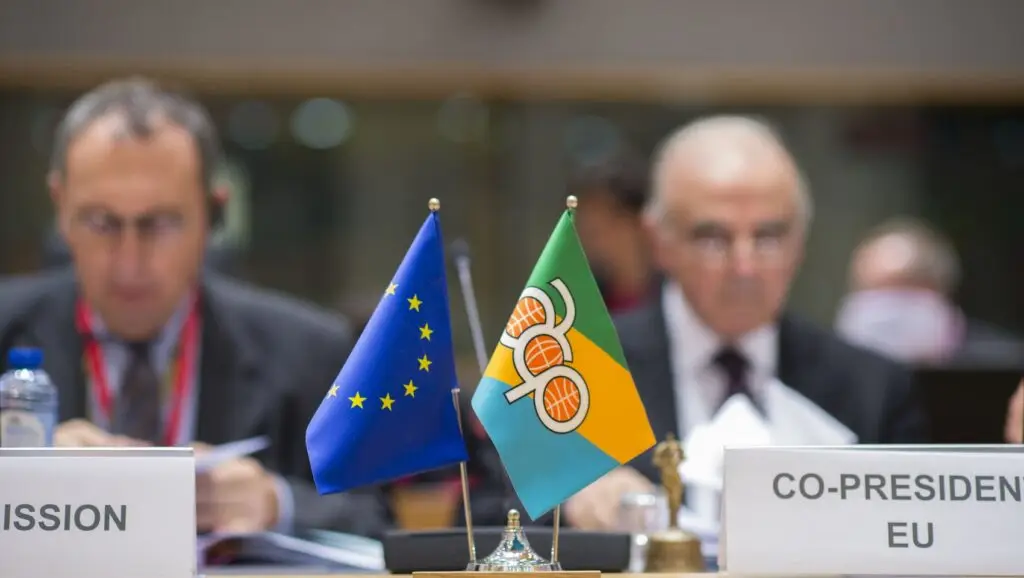
Part II: Who wants what? Breaking down the EU and ACP group’s positions in the latest CPA negotiations

This month the European Union (EU) and the African, Caribbean and Pacific (ACP) group are set to embark on negotiations to decide the framework for a new Cotonou Partnership Agreement (CPA),  expected to be in place in February 2020. As the process unf …

Continue reading ›
13 September 2018

Part I: Understanding the Cotonou Partnership Agreement

What is the Cotonou Partnership Agreement (CPA)?Signed in June 2000, the CPA is a treaty between the European Union (EU) and 79 African, Caribbean and Pacific (ACP) countries. Its main objectives are poverty reduction, sustainable development and econo …

Continue reading ›
30 June 2018

Can the African Continental Free Trade Area Offer a New Beginning for Trade in Africa?

On 21 March 2018, AU leaders met in Rwanda to finalise the signing of a new trade agreement creating the African Continental Free Trade Area (AfCFTA). The inauguration of the AfCFTA reflects a milestone for future continental unity, regional integratio …

Continue reading ›
3 May 2018

South Africa, Nigeria and the AfCFTA: 6 key questions answered

In March 2018, 44 African countries signed the umbrella agreement creating the African Continental Free Trade Area (AfCFTA) in Kigali, Rwanda. The AfCFTA represents a continental vision for a single market for the trade of goods and services and the fr …

Continue reading ›
30 April 2018

Cultivating Smallholder Inclusion in Southern Africa’s Macadamia Nut Value chains

This paper examines the potential for developing a macadamia nut value chain within Southern Africa, while also exploring the potential for incorporating smallholder producers into the macadamia nut industry. Using the country case studies of South Afr …

Continue reading ›
12 March 2018

Women-friendly trade: What can governments do better?

It’s a familiar sight at border posts: women with baskets groaning under the weight of fresh produce, cheap manufactured goods or handicrafts ready to be traded on the other side. Informal cross-border trade is one of the oldest forms of economic survi …

Continue reading ›
28 February 2018

Plurilateral Trade Agreements and the Impact on LDC’s – To Participate or not to Participate? Country Case Study: Bangladesh

Given its long association with the multilateral trading system, Bangladesh has adopted a cautious stance towards the concept of plurilateral trade agreements (PTAs). It knows that it would face a number of risks and uncertainties if it were to join on …

Continue reading ›
28 February 2018

Plurilateral Trade Agreements and the Impact on LDCs – To Participate or not to Participate? Country Case Study: Chile

Chile is considered a socio-economic development success story in Latin America. Since transitioning to democracy in 1989, the country has experienced positive growth and attained middle-income country status. Liberal economic programmes coupled with p …

Continue reading ›
28 February 2018

Plurilateral Trade Agreements and the Impact on LDC’s – to Participate or not to Participate?

Plurilateral trade agreements (PTAs) are voluntary agreements of a sectoral nature that are entered into by more than two WTO member states. The WTO membership is to be notified of PTAs when signatories decide to formally incorporate a PTA into the WTO …

Continue reading ›
28 February 2018

Plurilateral Trade Agreements and the Impact on LDCs – To Participate or not to Participate? Country Case Study: Malawi

This case study analyses Malawi’s position vis-à-vis the current negotiations underpinning the four plurilateral agreements discussed in this report. It explores issues surrounding the negotiations that are pertinent to Malawi and provides recommendati …

Continue reading ›
28 February 2018

The tortured path of global migration reforms

In 2017, more than one hundred countries began discussions on the Global Compact for Safe, Orderly and Regular Migration and the Global Compact on Refugees. Both seek to arrive at agreed-upon principles and commitments among UN states on issues facing …

Continue reading ›
30 November 2017

The UN Global Compacts on Migration and Refugees: A New Solution to Migration Management, or More of the Same?

On 22 and 23 May 2017, the UN hosted its second informal thematic session of the Global Compact on Migration. Designed to gather information, the sessions provide an informal setting for sharing experiences among UN member states, together with civil s …

Continue reading ›
8 November 2017

Valetta 2015 to Abidjan 2017: Recent Trends in AU-EU Migration Relations

Ahead of the fifth AU–EU Summit in November 2017, this policy brief identifies changing trends in Africa–EU migration relations under the 2007 Joint Africa– EU Strategy (JAES), the EU Emergency Trust Fund for Africa (EUTF) and the outcomes from the 201 …

Continue reading ›
28 September 2017

Managing Economic Migration in South Africa

This paper provides a comprehensive overview of South Africa’s immigration regime and its impact on African economic migrants. The current migration policy is being amended as a result of South Africa’s desire to attract skilled migrants and deter irre …

Continue reading ›
28 August 2017

A brief guide to the Continental Free Trade Agreement

Asmita Parshotam unpacks the continent-wide agreement aimed at accelerating integration and economic development. What is the Continental Free Trade Agreement?The Continental Free Trade Agreement(CFTA) is an Africa-wide free trade agreement (FTA) desig …

Continue reading ›
1 June 2017

Harnessing Investment in Tanzania’s Agricultural Sector for Inclusive Growth: Where to From Here?

This paper unpacks Tanzania’s investment laws and their impact on the development of the country’s agricultural sector. It discusses current government-led policies and initiatives that aim to stimulate growth in Tanzania’s agricultural sector while im …

Continue reading ›
30 November 2016

Mapping Current Trends in Infrastructure Financing in Low-Income Countries in Africa within the Context of the African Development Fund

This paper examines the role of the African Development Fund (ADF) in its efforts to support African low-income countries (LICs) in meeting their infrastructure financing needs. African LICs currently face tremendous infrastructure financing gaps, but …

Continue reading ›