This research document investigates the role of human development as a pathway to a transformed and peaceful Zimbabwe. It shows that the quality of governance and its impact on development outcomes matter. Periods of poor governance have exacerbated ec …
In anticipation of South Africa’s annual State of the Nation Address (SoNA), this document contains an assessment by the Institute for Justice and Reconciliation (IJR) of some of the key questions that will be facing the country in 2022. This is based …
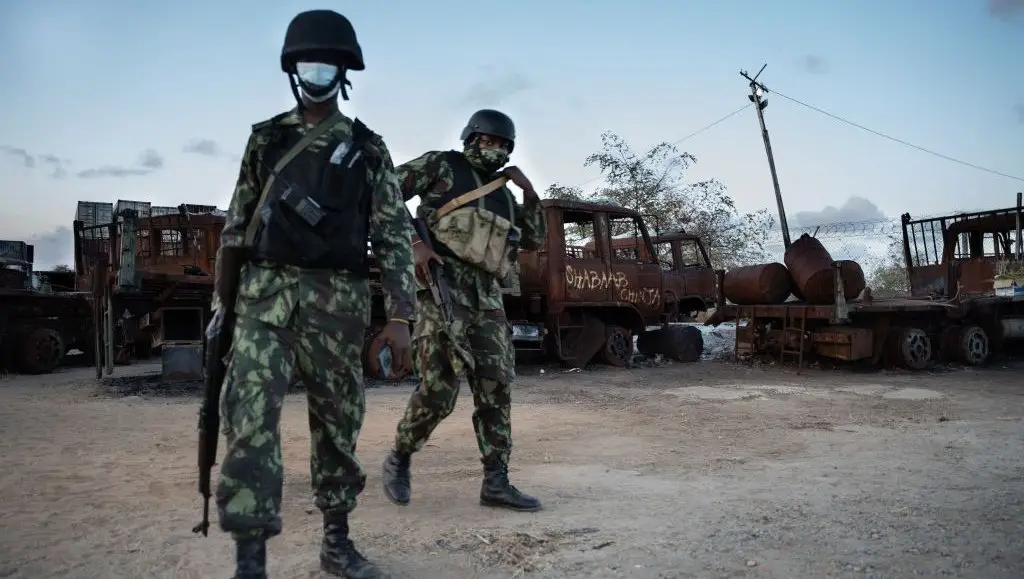
Efforts to contain the ongoing conflict in Mozambique appear to be losing ground. According to reports, Niassa province is now likely to become the next frontier of insurgent activity by the Islamist group Ahlu-Sunna Wa-Jama’a (ASWJ). This comes amid o …
Stretching 2,740 km along the warm Indian Ocean, Mozambique is vulnerable to tropical cyclones and floods in the North and droughts in the South. According to the Notre Dame Global Adaptation Initiative (2021), Mozambique is one of the world’s most vul …
Mozambique’s ongoing conflict, waged by the Islamist group Ahlu-Sunna Wa-Jama’a (ASWJ), is expected to continue for at least three more years, according to newly appointed Mozambican defence minister Cristóvão Chume. This is optimistic, as the ongoing …
The African Continental Free Trade Area (AfCFTA) opened for business on January 1, 2021, promising opportunities for people from all socio-economic strata to share in economic growth in the world’s largest free-trade zone. Signed by 54 African countrie …
In Mozambique’s northern province of Cabo Delgado, the insurgent group Ahlu-Sunnah Wa-Jama’a (ASWJ) has spearheaded debilitating attacks on the state and local populations. Since 2017, the group – known locally as al-Shabaab – has consolidated its pres …
This paper deals with human development as an inclusive pathway to peace in Kenya, which is considered within the context of state capacity as well as the choices available to individuals. In many nations, peace and security are a function of sound hum …
In northern Mozambique, a group known as Ahlu-Sunna Wa-Jama’a (ASWJ) has spearheaded a debilitating insurgency that has caused mass displacement and loss of life. As the group consolidates its position in Cabo Delgado, questions arise about its positio …
In South Africa, the economic hub of Africa, years of stifled growth have been worsened by the COVID-19 pandemic’s extended restriction of economic activity. The economy shrank by 7% in 2020, causing widespread material deprivation, job losses, and anx …
Perceptions of pervasive corruption in South Africa have dominated public discourse for the better part of the past decade. In its many forms, corruption undermines the effectiveness of the state, worsens the quality of public services, and ultimately …
The African Continental Free Trade Area (AfCFTA) opened for business on January 1, 2021, promising opportunities for people from all socio-economic strata to share in economic growth in the world’s largest free-trade zone. Expected to cover 54 African …
In anticipation of the State of the Nation Address (SONA), the Institute for Justice and Reconciliation (IJR) has produced this succinct policy brief assessing where we are as a nation and the opportunities that we can leverage in the interest of stren …
This paper is comprised of three sections and a conclusion. Section 1 provides an overview of the SARB survey methodology. The SARB survey is a nationally representative opinion survey run by the IJR. The survey interviews 2 400 South Africans, generat …
Gender equality is both Sustainable Development Goal (SDG) No. 5 and a theme underpinning various other goals of the 2030 Agenda for Sustainable Development. The agenda highlights the need for gender-equal access to education, ownership of resources, a …
In South Africa, “social grants” providing income support to poor households have a long history. More than 17 million citizens, almost one-third of the population, receive a cash transfer from the state each month. The largest social grant programs ar …