Expert Researcher

Malte Brosig

About

Malte Brosig is Associate Professor in International Relations at the Department of International Relations at the University of the Witwatersrand in Johannesburg. He joined the Department in 2009 after he received his PhD from the University of Portsmouth. His main research interests focus on issues of international organization interplay and peacekeeping in Africa. He is the author of Cooperative Peacekeeping in Africa: Exploring Regime Complexity which was published at Routledge. Prof Brosig is a rostered consultant for the United Nations University’s Centre for Policy Research in Tokyo and holds fellowships at the Canadian Centre for R2P at the University of Toronto, the European Centre for Minority Issues in Flensburg and the German Institute for Global and Area Studies in Hamburg.

Publications: 3
Features: 1
AREAS OF EXPERTISE
EDUCATION
All work from Malte Brosig
20 June 2018

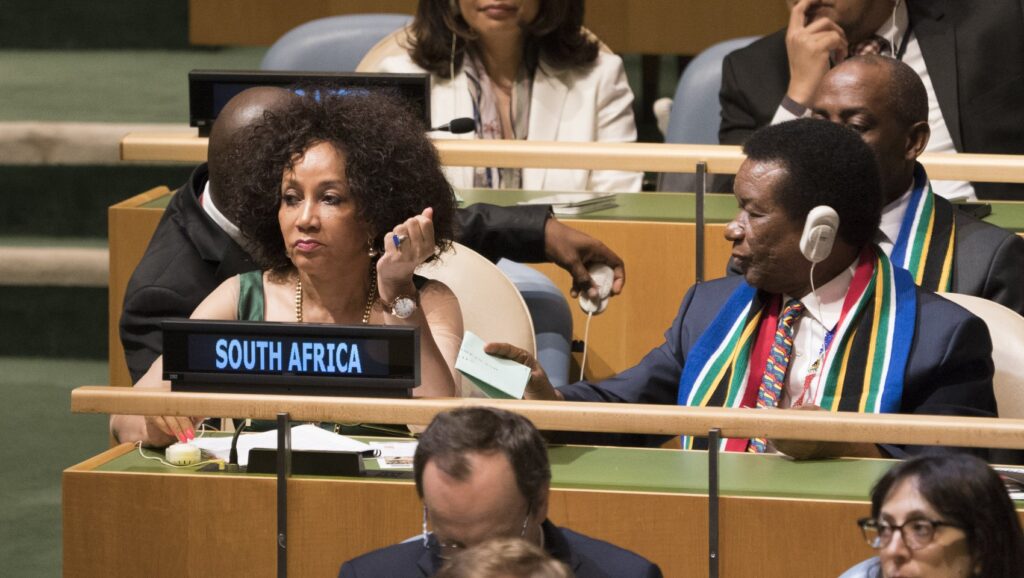
South Africa on the UN Security Council: Priorities and challenges

South Africa will join the United Nations Security Council as a non-permanent member for a third term in 2019-2020, having secured 183 of 193 votes in the 8 June election. It will serve alongside Côte d’Ivoire and Equatorial Guinea as African members o …

Continue reading ›
1 July 2015

African Capacity for Immediate Response to Crisis: Advice for African Policymakers

“Despite the operationalisation of the African Standby Force (ASF) within the AU security system, rapid reaction remains a challenging task, as the crisis in Mali has demonstrated. The African Capacity for Immediate Response to Crisis (ACIRC) has there …

Continue reading ›
1 July 2015

The African Capacity for Immediate Response to Crisis: Advice for African Policymakers

“Despite the operationalisation of the African Standby Force (ASF) within the AU security system, rapid reaction remains a challenging task, as the crisis in Mali has demonstrated. The African Capacity for Immediate Response to Crisis (ACIRC) has there …

Continue reading ›
1 January 2012

The Responsibility to Protect – From Evasive to Reluctant Action ? The Role of Global Middle Powers

“In this document it was argued that R2P is becoming increasingly central to the way in which the international community thinks about and responds to the problem of genocide and mass atrocities. The short history of R2P shows this progress only too we …

Continue reading ›