
Charcoal is increasingly becoming a primary energy choice, accounting for 96% of cooking fuel for the growing urban population of South Sudan. Yet not much is known about the level of government regulation to make the woodfuel, especially the charcoal …
On January 26, 2022, news broke of a salary adjustment for the members of the South Sudan’s legislature. Accordingly, each legislator will receive SSP800,000, which is equivalent to about $2,000 per month. This news generated a mixed response within th …
Local content requirements promote national capacity, employment, economic diversification, and economic growth. Local content develops capacities that link the oil and gas sector to other industries. While over 80% of the oil and gas sector’s workforc …
While South Sudan is endowed with 3.5 billion barrels of proven oil reserves, the exploitation of this natural wealth is turning into a catastrophe for some local communities, particularly in Melut County. Through focus group discussions, individual in …
This paper reviews the existing literature to determine the adequacy of evidence and extent of the environmental impacts in the oil producing areas in South Sudan. The following is revealed: Evidence from previous studies shows that there is a serious …
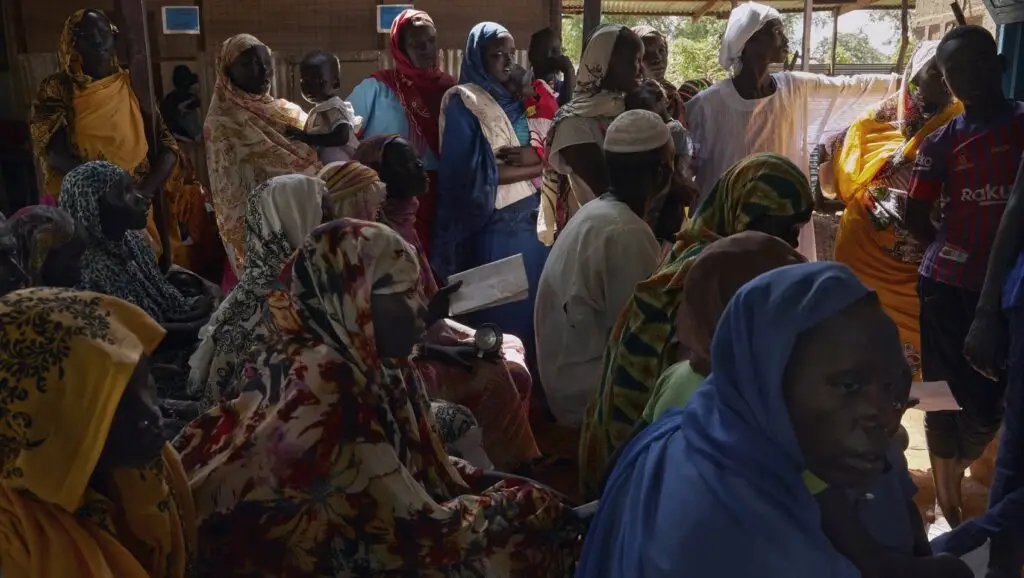
Nhial Tiitmamer, Director of the Environmental and Natural Resources Programme at the Sudd Institute, shares his research into climate-change, migration, and conflict in South Sudan and offers solutions for mediation. This is part of our series on Clim …
South Sudan is one of the most vulnerable countries to coronavirus disease (COVID19). The high level of vulnerability emanates from conflict induced state fragility, weak health system, high level of illiteracy, poverty and weak economic system, oil de …
The COVID-19 outbreak presents three lessons for South Sudan, with 156 confirmed cases to-date. First, the government’s policy to clamp down on social gatherings is not as effective as assumed. Granted the streets are indeed empty now compared to the p …
This year’s flood is one of the worst in South Sudan’s history. It has affected about one million people from 142,783 households in 8 of the former 10 states, compared to only 344,618 people in 2013. People lost homes, livelihoods, and shelter and got …
This policy brief discusses how the recently proposed environmental and social audit of the petroleum companies’ operations by the Ministry of Petroleum can be conducted to generate scientific evidence that can assist in finding a permanent solution to …
This paper reviews the existing transparency and accountability rules to understand the extent to which these have been implemented. Despite the existence of strong petroleum transparency and accountability legal rules, we find that compliance with the …
Using experimental data from a pilot project administered in rural Tonj South, Aweil West, and Aweil North, this paper studies climate services reception and application in South Sudan. The pilot climate service was first of its kind directly delivered …
South Sudan faces a serious energy crisis due to a number of factors, including devastating conflicts (e.g. 1955-172, 1983-2005 & 2013–present) and reliance on the fossil fuel source. The country has the lowest energy consumption rate in Africa and the …
Climate change poses global risks. These risks adversely affect women in developing countries because of their little capacity to adapt. Previous studies show that women are more vulnerable to climate change than men for a variety of reasons, including …
South Sudan, a country endowed with petroleum and other natural resources, allocates 2% and 3% of the net petroleum revenues to producing states and communities, respectively. This revenue sharing arrangement is enshrined in the Transitional Constituti …
South Sudan has experienced decades of protracted conflicts, some of which might have been caused in part or exacerbated by climate change and variability. Climate change causes scarcity of resources and forces communities to raid their neighbors or mi …
December 15, 2017, marked 4 years of a political turmoil in an independent South Sudan. This has culminated in the country’s widespread insecurity, an unmatched humanitarian tragedy, and a heightening economic distress. This misery deepens as a host of …
This policy paper evaluates the prospects of peace in South Sudan within the context of the recently proposed revitalization process of the 2015 political pact. The paper broadly argues that the revitalization process is important, but it must contend …
This paper discusses the state of South Sudan’s national unity. Ever since the outbreak of the violent conflict in 2013, the landscape in South Sudan has not been the same. The conflict has created very bitter divisions and experiences that have had cr …
Environmental conditions in South Sudan’s petroleum producing areas have continued to deteriorate. This is demonstrated by recent reports of oil leaks and spills, inappropriate handling of produced water and mud pits, birth defects, people and animals …
South Sudan has encountered waves of periodic fuel crisis since 2011. The government has attempted quick-fix measures, but the crisis has continued unabated. Despite a number of speculations surrounding this matter, however, the actual causes and impac …